
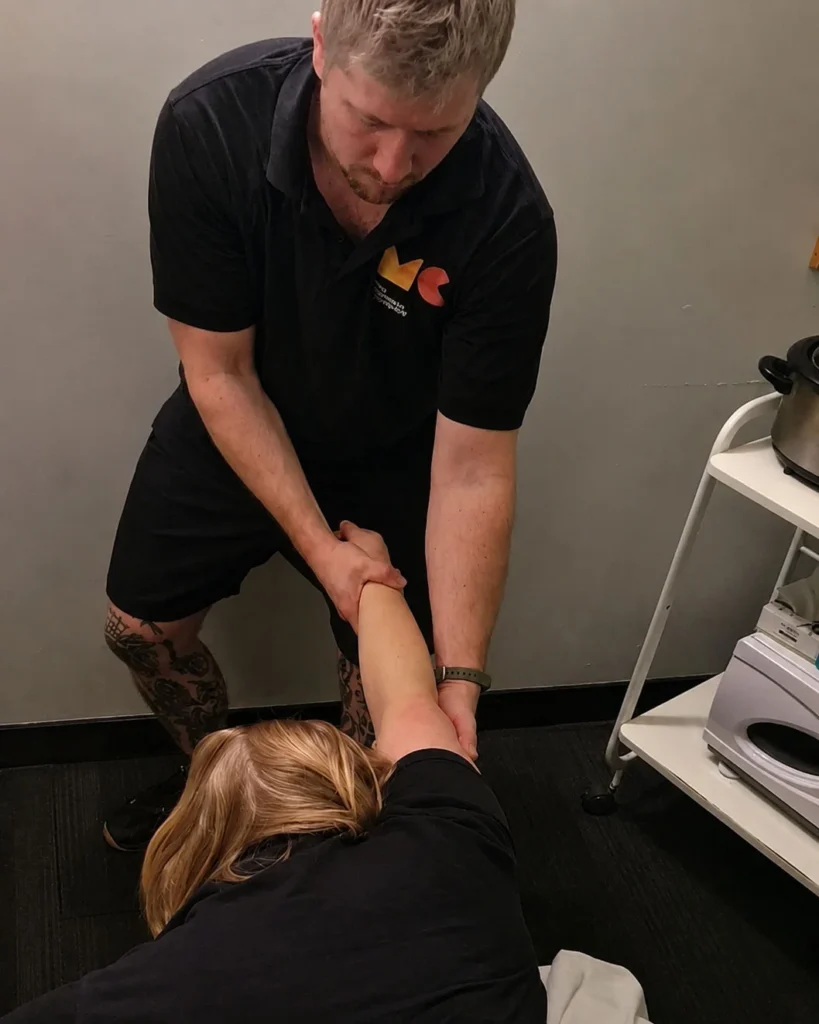
If you have recently completed a Hyrox simulation or a high-volume functional fitness session, you may feel as if your lower back has become locked. This stiffness is a frequent complaint during the spring race season. While it can be alarming, it is usually a temporary physiological response to hybrid training rather than a sign of permanent structural damage.
This locked sensation is caused by muscle guarding. During the varied movements of a Hyrox circuit such as heavy sled pushes, rowing, and wall balls, the muscles surrounding your spine work hard to keep stability. When these muscles reach a point of exhaustion, the nervous system may lock the area as a protective measure to prevent overextension. This creates a feeling of rigidity that makes simple movements, like bending over or standing up from a chair, feel restricted and uncomfortable.
Normal post-training stiffness should gradually reduce over 48 hours with light movement and proper hydration. However, if the locked feeling is accompanied by sharp, radiating pain into the glutes or legs, or a loss of sensation, it suggests nerve involvement or a disc issue that may need an assessment by a physiotherapist.
The most effective way to ease this stiffness is not through stretching, which can often make things worse. Instead, focus on low-impact mobility. Gentle movements that encourage the hips and mid-back to move independently can signal to the nervous system that it is safe to release the tension in the lower back. Focusing on hip mobility and core endurance during your training sessions will help ensure the lower back is not forced to overcompensate in future.