
Neck tension is a common complaint by almost everyone who uses a computer all day. Many try to resolve it either consciously or unconsciously by stretching their neck. While these movements often provide a temporary sense of relief, they tend not to provide a long-term solution. Understanding why stretching alone is often insufficient is key to managing chronic neck discomfort.
The main reason stretching feels effective in the short term is that it briefly dulls the pain signals sent to the brain. However, with a typical desk-based posture, the muscles at the back of the neck are already in a stretched, lengthened position and pulling on them further can trigger a stretch reflex, causing the muscles to tighten even more to protect the cervical spine. So, the tension is a symptom of muscle weakness or fatigue rather than a lack of flexibility.
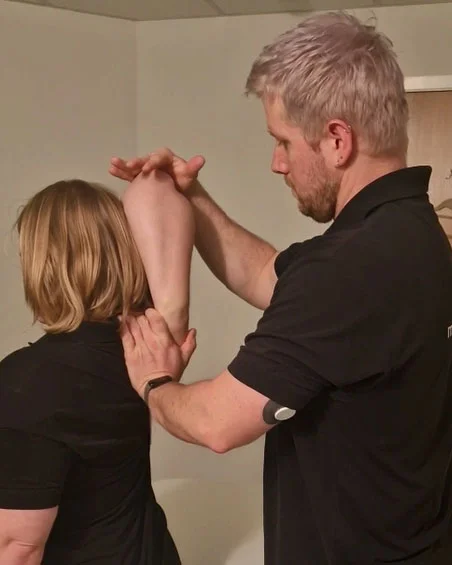
To help with this problem, the focus must shift from stretching to stability and strength. The health of the neck is heavily dependent on the mobility of the mid-back (the thoracic spine) and the strength of the muscles that support the head. If the mid-back is stiff, the neck is forced to move excessively to compensate, leading to irritation. So, tackling the stiffness in the upper back and strengthening the deep neck flexors is usually more effective than repetitive stretching.
Overall, neck stretches can be useful for temporary pain management, but they are rarely a cure. A physiotherapist will help to develop a combination of improving mid-back mobility and building the muscular endurance necessary to support the head throughout the day. If neck pain is accompanied by persistent headaches, dizziness, or numbness in the arms however, it is important to seek medical help.